

Is there something psychic about writing novels?
and a few words of self-promotion.

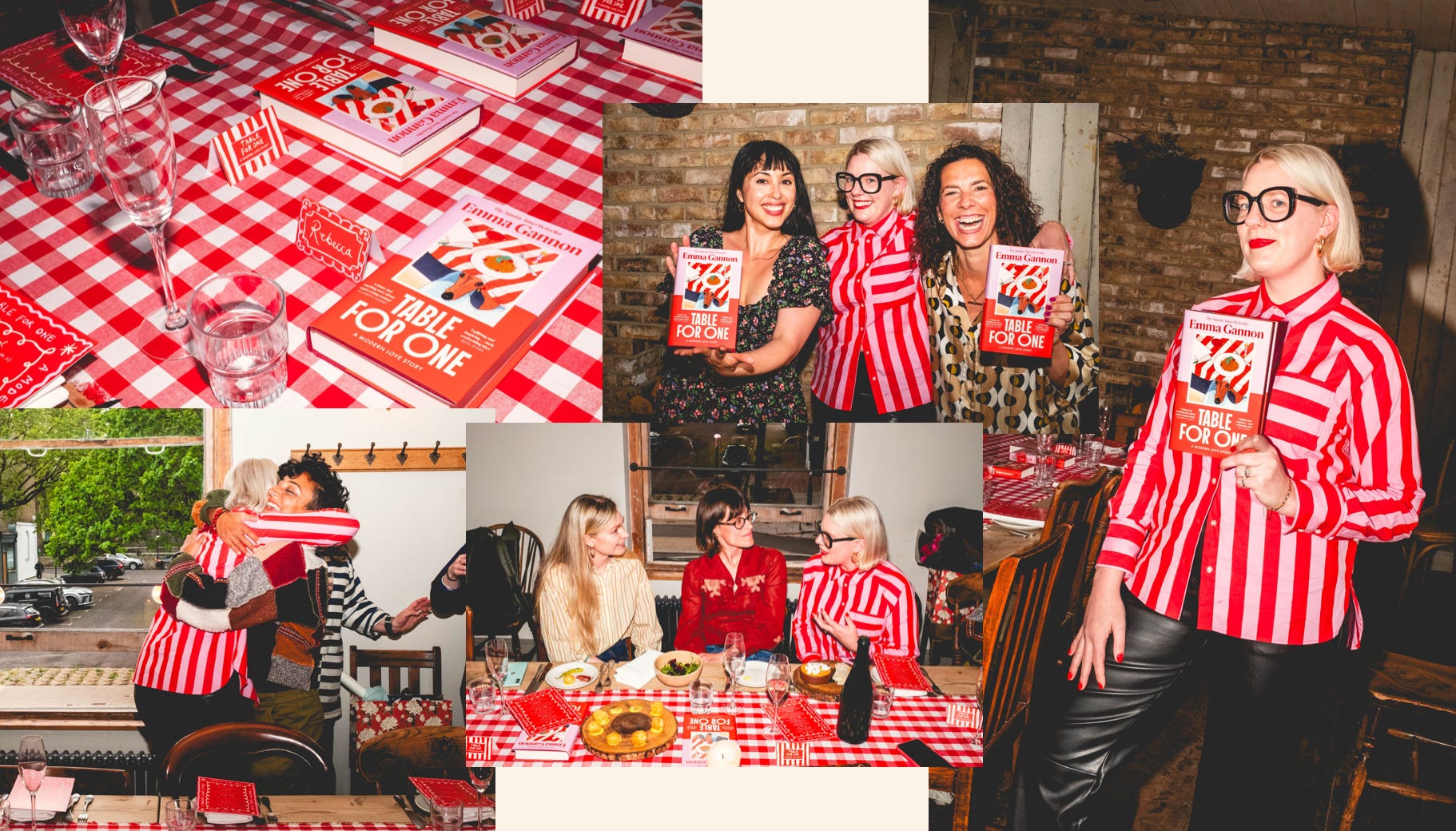

I’m writing this in bed this morning, wondering whether to press ‘send’. This is meant to be a ‘did you know my novel Table for One is out in paperback today’ post—but to be really honest with you, I’m quite TIRED of the act of promoting a book. I love to WRITE books, but—maybe this is a ‘getting older’ thing—I am finding it increasingly hard to do the tap-dancing required to sell them.
Writing a book is how I want to spend my time. It’s very quiet, very introspective. I love time at my desk, or on a train with my noise-cancelling headphones, or in the corner of a favourite café. Promoting a book can start to feel like I’m in the school play but I forgot to learn my lines. I’m wearing an outfit from a fancy-dress box and I’m in the centre of the stage and smiling awkwardly at my family in the front row. “What am I meant to be saying again?”
The reality is: everything I want to say is already in the book.
I cannot write 1,000 extra words about the book for a magazine, because… everything I want to say is already in the book.
I’ve self-promo’d my way through the past ten years, and for the most part I’ve enjoyed it, and felt grateful for the connection it brings. Now: I feel like a little old lady who wants to fall asleep in a chair whenever anyone invites me to 1) do a panel; 2) throw a big launch party; 3) post some ‘ASSETS’ about my book. I really don’t like the word assets. ASSETS attached!!!! thank you, kind regards!
My novel Table for One is out in paperback today, and I thought: ah I don’t need to post about it today. If someone wants to find it, they’ll find it!
And then I remembered that I’m celebrating the paperback tonight in a SMALL bookshop and I can’t wait.
And then I remembered that it took me four years to write. That I spent a small fortune (a hefty slice of my advance?) on booking out hotel rooms, because I went through a phase where I could only write good things at 1am, completely alone. I wanted to honour my past self, that little worker-bee, who worked SO HARD on this novel. A novel that was challenging me and stretching me, and allowing me to grow as a writer. I took so many wrong turns when writing Table for One, that I had to really tune into my own intuition in a much more potent way. (Do NOT write ‘for the market’. Do not try and reverse engineer ‘what might sell’. EW!) The only way I could get through it was to have a strong backbone, trust myself, my taste. I stopped asking other people for opinions or directions. I was leading the way again. My mantra for making things: *I* have to like it. If I like it, that is good enough for me.
The wobble in confidence was partly because—and I promise this isn’t meant to be a humblebrag—my debut novel Olive did well. It had a ‘strong hook’ and I was a ‘young debut’ and I got all the press you could imagine, and it was this big shiny moment. The ‘follow-up to Olive’ was the subject line of many emails with my publishing team and therefore I felt SO MUCH PRESSURE! If I could go back in time, I would tell that version of me to calm down: it’s not emergency surgery. You’ll be OK.
I’ve also been thinking about how Olive and Table for One have turned out to be slightly spooky psychic experiences for me.
Olive is about a group of four friends. Olive is figuring out her child-free path, while her friend Bea has a growing family, Cecily is pregnant and Isla is doing IVF. I started writing it when I was 28, and it was published when I was 30. Over the five years since it was out, the Olive plot-line CAME TRUE.
One of my closest lawyer friends — who inspired Cecily — got pregnant; another friend, who inspired Isla, went through IVF; and the friend Bea was based on went on to have two children. Olive is CLEARLY based on me—and she stayed child-free, like me. I didn’t know any of this would happen when I wrote Olive.
With Table for One—it is a story about a Millennial woman Willow who has an identity crisis following a break-up and breakdown of the joint business she ran with her partner. She is left with nothing, and needs to find herself again. Wisdom and curiosity come in the shape of a 20-something online influencer called Naz, who she meets via a freelance magazine assignment. I loosely based this twenty-something character on someone I know.
A few weeks ago, I spoke to this person — who had contacted me completely out of the blue, and who I know hasn’t read the novel, so wouldn’t have known — and I had one of the biggest epiphanies of my life during our conversation.
You know those moments where you know something, but you just needed someone to say it in a certain way for it to finally GO IN? That happened. My very own Naz did some wonderful witchcraft on me that day, and I felt amazing. (Had I summoned this energy, or had I predicted it? Who knows.)
I don’t know if this will make sense to anyone else. But clearly, in my novels, I am working some stuff out in my subconscious. Like five-year-olds who get their dollies out to talk to each other, us adults sometimes make up little stories and get everyone to talk to each other too. We work things out. We get to the bottom of things.
Writing a novel is a brave thing to do. It takes so much fucking stamina. And I am SO proud to have stuck it out, when I could have binned it so many times, or given up. It would have been SO much easier to give up.
If you really want to write something: Don’t give up.
Thank you for reading my work.
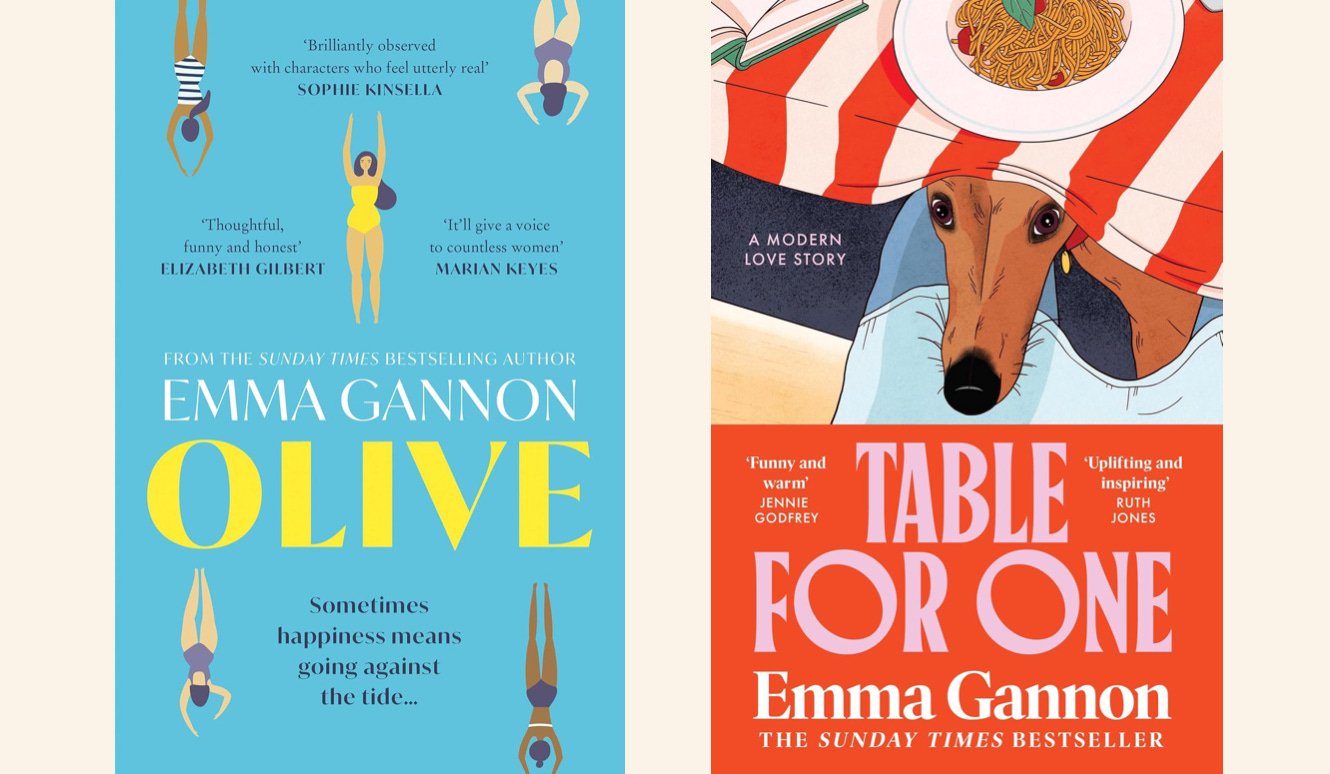
Thank you to People magazine for picking Table for One as ‘fiction of the week’ and to Apple for picking it as their ‘best of 2025’.
Thank you to the 7,000+ people so far who have rated it on Goodreads.
Thank you to The Guardian for publishing my column about my love of a table for one and solo-dining.
Thank you Cosmopolitan for publishing an extract.
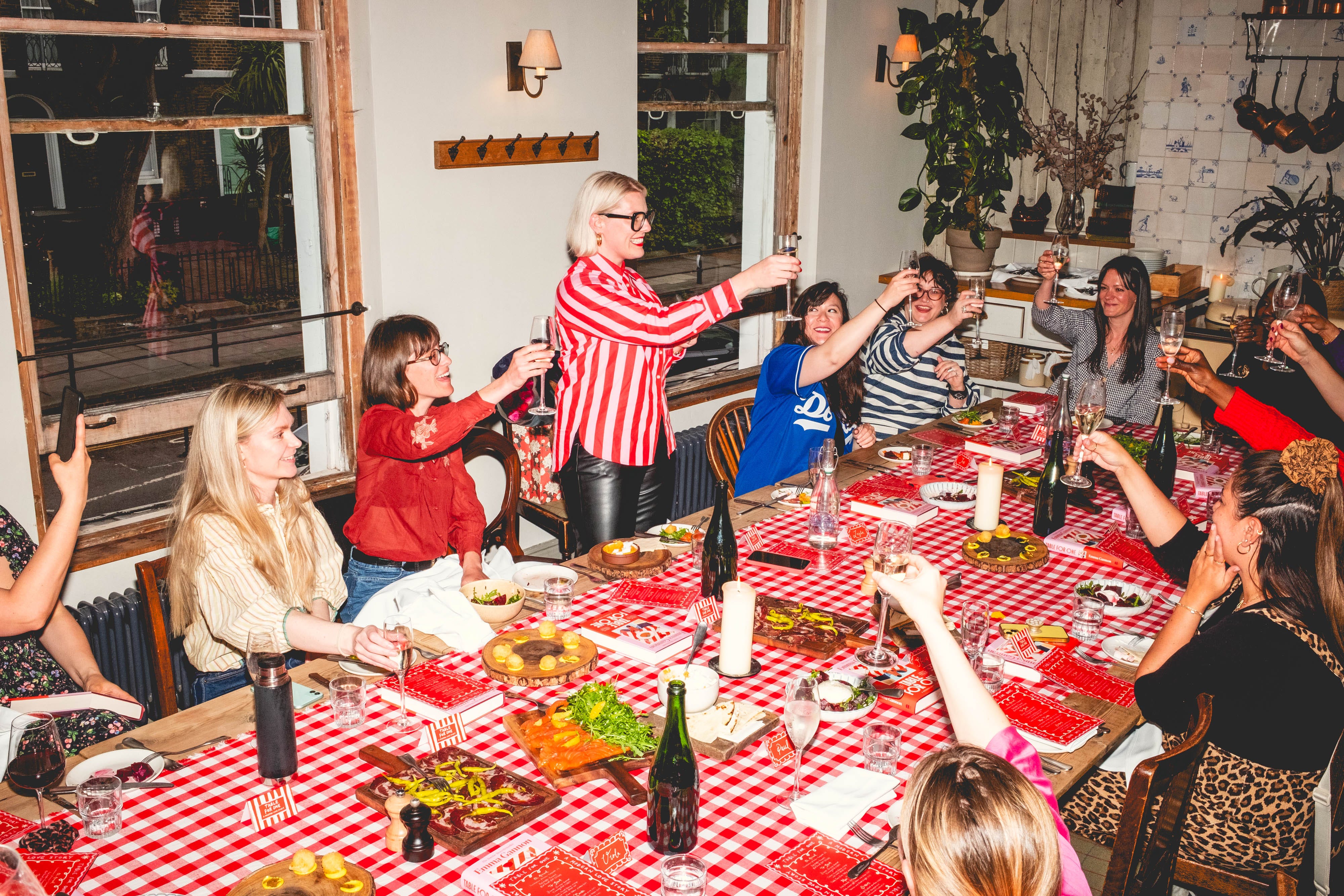
Thank you to Her Table for partnering on the dinner party of dreams last year. It was one of the highlights of the campaign for me, getting to celebrate with some of my Substack readers. And thanks to The Pig & Butcher pub for their hospitality at a small dinner I hosted (below) for some writer pals.
Thank you to Conde Nast Traveller for inviting me to interview some of my favourite writers about their favourite table for one.
Thank you to the team at Harper Fiction and my agent at Curtis Brown.

out in paperback today!
More to read….


Thank you, Emma, for such a refreshing piece. I love everything you write, and I admire your approach to bringing new perspectives and processes and sharing them with us all. I’m a psychic medium and I write and I can absolutely agree that there is something ‘psychic’ in the process of committing our soul to paper. William Butler Yeats would have agreed, and also doubtless Sylvia Plath, who had a great interest in the occult. I might write a whole Substack post on this! 🌟💙
Thank you for the encouragement to write a book that lights you up from the inside rather than a book that will sell!